Ephesians 1:3
Blessed is the God and Father of our Lord Jesus Christ, who has blessed us with every spiritual blessing in the heavenly realms in Christ.


Blessed is the God and Father of our Lord Jesus Christ, who has blessed us with every spiritual blessing in the heavenly realms in Christ.
After prayer for the recipients, Paul turns to praise.
What we may not know is that God has blessed us with every spiritual blessing in the heavenly realm.
We may not know that because we may be going through a difficult circumstance.
We may look at ourselves and the unbeliever, and it seems the unbeliever is faring better.
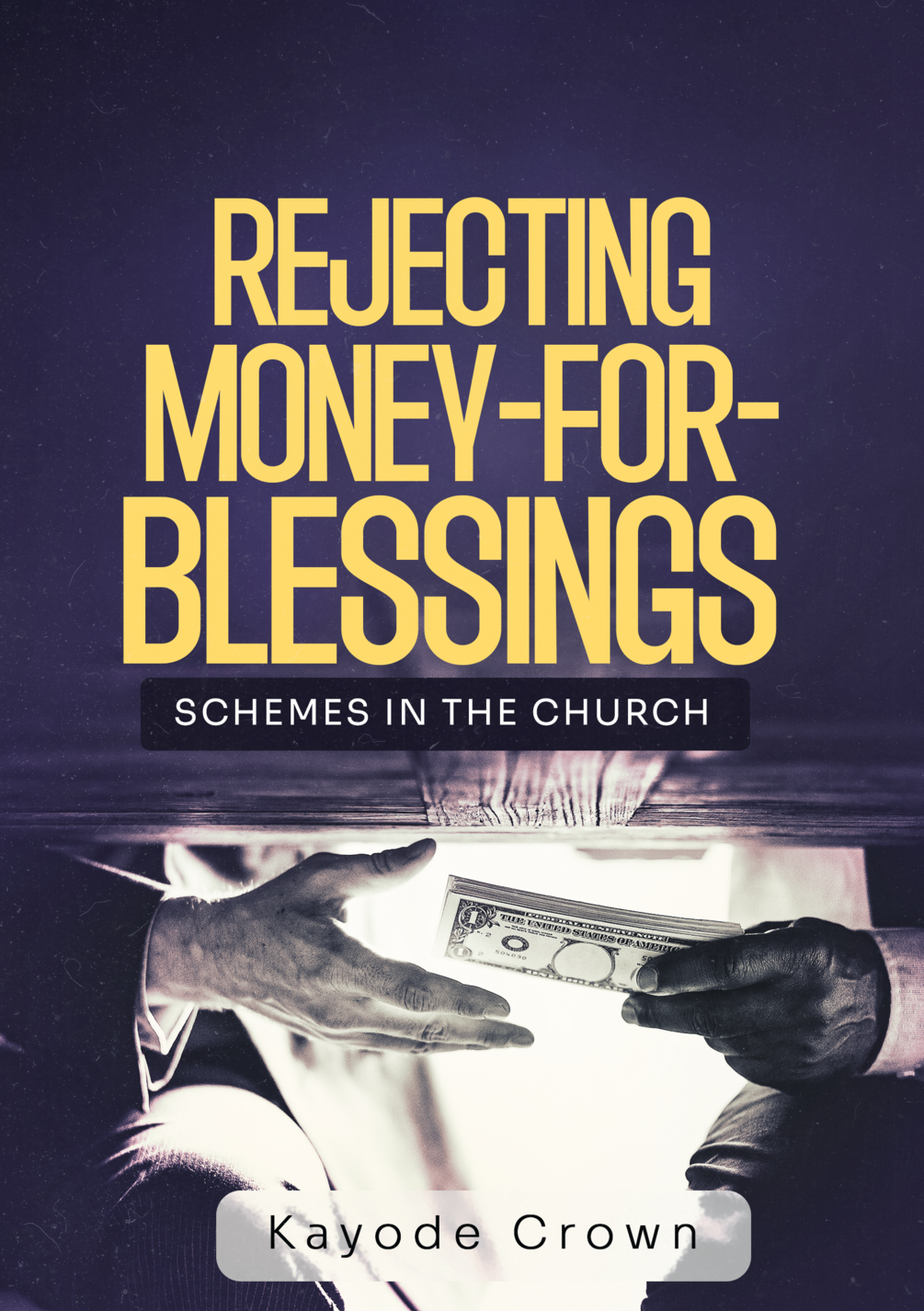
That may be the origin of people who want to say there is a new revelation now, and the blessing is money in your bank account. And if you give them what you have, you will have much more. And they can regale you with story after story that you cannot independently verify.
The best they can do is twist scriptures, call up and down, and misconstrue spiritual blessings for carnal blessings. They call the truth a lie and a lie the truth.
When the people wanted to make Jesus their king, He hid from them (John 6:15). And through the path of humiliation, He became the head of all things for the church (Ephesians 1:22).
What Jesus worked for has not been fully realized. Therefore, the life of bliss has not been promised, but it's coming at the second coming. Refusal to make that distinction and to claim that everything must be perfect now is a gate of hell because it is a lie.
"In the world you have trouble and suffering," Jesus said (John 16:33). There is nothing you can do to circumvent it.
And why did those people want to make Him king? It was because he fed thousands of them without them having to do anything (John 6:25-27).
It was a shortcut, but Christ refused to be their ATM, refused to be their shortcut to a life of bliss. And they did not just want to make him King; they wanted to "seize him by force to make him king (John 6:15)."
They tried to summon "the things that do not yet exist as though they already do", as if they are God, to whom Paul applied those words in Romans 4:17.
(as it is written, “I have made you the father of many nations”). He is our father in the presence of God whom he believed—the God who makes the dead alive and summons the things that do not yet exist as though they already do. (Romans 4:17)
This verse is not talking about you. You do not make the dead live.
And you are not a small god, and can only depend on God. Jesus applied "you are gods" to Himself, not to everyone (John 10:34-36).
People whom I call money-for-blessings heretics create false doctrines, trying to force scriptures to say what they are not really saying to achieve their carnal end.
Just because they had a flash of blessing, they want to create a doctrine around that, just as those people want a reproduction of the bread and fish miracle by any means necessary.
Look at how Jesus responded to those people.
When they found him on the other side of the lake, they said to him, “Rabbi, when did you get here?” Jesus replied, “I tell you the solemn truth, you are looking for me not because you saw miraculous signs, but because you ate all the loaves of bread you wanted. Do not work for the food that disappears, but for the food that remains to eternal life—the food which the Son of Man will give to you. For God the Father has put his seal of approval on him.” (John 6:25-27)
If you read further, you will see that that conversation did not end in a good place. Jesus was not able to shift their minds from the temporary to the eternal. But some preachers have shifted the eyes of the people of God from the eternal to the temporary. That is not good.
The attempt to turn spiritual blessings into material goods is problematic. It mocks those who had to suffer for the sake of Christ and who, because they are Christ's, have lost their belonging and some even lost their lives.
Those who sit on top of the giving pyramid scheme, that is, those you give to be blessed, are those who, Paul said, glory in their shame and mind earthly things (Philippians 3:19). And some of them may have seared consciences (1 Timothy 4:1-2) and just lie profusely.
The word "bless" occurs three times in this verse. One is a praise to God (blessed be God), the second is the divine act of blessing us (who has blessed us), and the third is the reality in our lives (with every spiritual blessing).
This is the common reality of all believers.
God is worthy of honor and praise because of the stupendous blessings we have in Christ. And in the next verses, Paul would begin to unveil what those blessings are: those unquantifiable blessings, not that we would have, but we already have.
So this verse is setting up what Paul will discuss from verses 4 to 14, which should shape how we think of ourselves as a unique people, as the most blessed among people, as special.
We can apply the same words that Elizabeth applied to Mary, the mother of Jesus, because God singled her out among many to bear Jesus (Luke 1:42). Elizabeth told Mary: "Blessed are you among women." It's the same greek work word that both Elizabeth and Paul used.
Therefore, we do not need to seek a blessing from Mary or through Mary. We won't do that if we take the words of the focus verse seriously and to heart. We would not say Mary should pray for us, since we would be amazed by the blessing we have in the heavenly realms in Christ.
And do not let those who say that there is a carnal way to bring down the blessing in the heavenly places. They can make very loud/believable proclamations, guilt-trip you into doing what we do not find in the pages of the Bible.