Philippians 4:16
For even in Thessalonica on more than one occasion you sent something for my need.


For even in Thessalonica on more than one occasion you sent something for my need.
Paul is continuing to explore how exceptional this church is. They did not just send a gift; they sent it repeatedly.
It was their thing, and Paul goes on for several verses to recognize them.
In the next verse, he would say it was not because he sought a gift, but because their giving to him would be a blessing to them.
This church was sensitive to Paul's needs. They were not just inward-looking; they were outward-looking. And the Paul who brought them spiritual light, they supplied with physical goods.
Paul did not have to ask this church what he instructed the Corinthians.
If we sowed spiritual blessings among you, is it too much to reap material things from you? (1 Corinthians 9:11)
Nevertheless, giving is tangential to Christianity and not central. Christ is central.
The problem comes when we have doctrines constructed or impressions given that push Christ out of the center and put money there.
And all this can happen subtly with a confident speaker, with a sly smile, shading the truth in the cause of money.
Instead of saying we need money for specific things (seen as a negative confession in some quarters), we rely on Old Testament scriptures to put a burden on the people.
We put the people under a guilt trip, and think salvation is not about the gift of God, but what you should pay. It is as if something is missing from the sacrifice of Jesus, in an encouragement to lust after Abraham's cattle.
Here, Paul links what they give to His need.
There is something satisfying about providing what meets people's needs. Not as a roundabout way to get God to give you something, but purely about meeting the needs of others.
Paul is saying thank you and would later pray for them, but they did not demand the prayer. They did not give because of the prayer; they gave to meet Paul's need. Their giving was not a prayer-getting gimmick.
This church knew Paul; they had seen him, knew his needs, and sent to meet those needs.
And Paul does not make it his usual practice always to bring up the issue of the giving of this church to shame others.
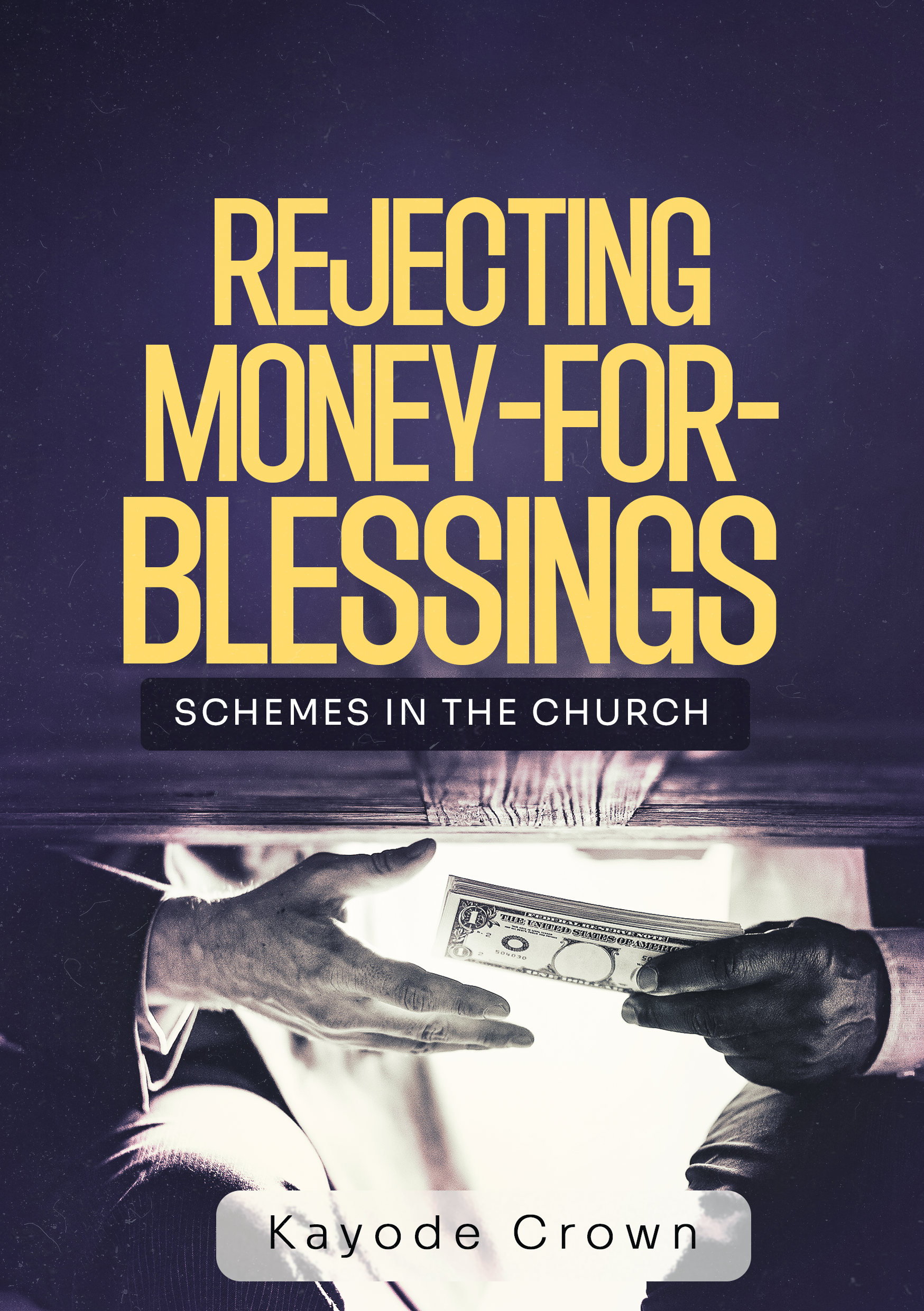
But how many messages have we heard where the word of God is used like a whip, where the desperation of the preacher is turned into made-up truth, where the door of the kingdom of God is described as having money as the key?
Jesus, in truth, said He is the door, and the sheep can go in and out through Him and find pasture (John 10:9).
We should not have messages that seem to imply that Christ says, "Give me some money before I let you in through the door."
When the goal of Christianity is money (even if partially) and not Christ, we have a problem.
We can be distracted by sideshows, unnecessary questions like:
- Whether Jesus was rich or not.
- What His clothes say about His wealth.
- When He said the Son of man does not have a place to lay His head, does He really mean it or not (Matthew 8:20)?
- When He said the rich man should sell all He had and give the proceeds to the poor, was He messing with him? Did he really mean it, or was He speaking tongue-in-cheek (Mark 10:21)?
Or the pastor saying:
- If it does not make money, it does not make sense.
When all these are the diet from the pulpit year in year out, there is a problem.
That means we are not being built into Christ (Ephesians 2:20-22); we are fixated on something else, and we will suffer.
No Christian does well without being built into Christ.
There is a flow of generosity that I believe is native to Christianity, like water from a well. Meaning Christ has been generous to us, we want to be generous to others.
But like any well, it can be blocked by sand. And a false teaching about giving can, I believe, be sand that blocks the real, actual giving that Paul is commending here - giving that is not forced.
God wanted to build a tabernacle in the wilderness (Exodus 25:8-9). If there were someone who could force people to give, should it not be God?
But He did not force, nor did He give them any promise of multiplication or blessing if they gave.
And their giving did not prevent God from judging them, as many of them perished in the wilderness, where they were bitten by a snake when they grumbled, etc. (Numbers 21:6-9).
God cannot be bribed.
And another thing: they gave because God had already given them when He asked them to ask the Egyptians for gold and stuff before they hurriedly left Egypt (Exodus 12:35-36).
Am I saying do not give if you were in the wilderness and God asked for gold and silver? No.
But God and what He wants are central, not what we give.
We would do well to listen when Paul said, I do not want your possessions, but you (2 Corinthians 12:14).
Why wind up with a sense of desperation, the removal of the eyes from Christ as savior to money as savior, where we stopped walking by faith, instead by what comes from our hands in blatant idolatry?
This generational covering of the well of generosity by the false dogmas of error that compromise the gospel of Christ is, I believe, like sand covering the water of truth.
It is unfortunate.